Astrology politics
[On Power]
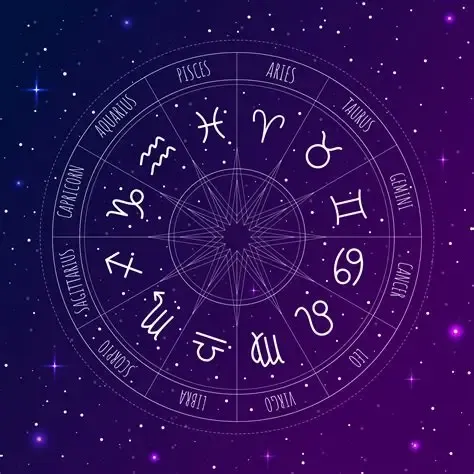
Astrology is slop mysticism for the 21st century, which has been mainstreamed because it lacks the complexity of the gnostics, hermeticists, and theosophists. One characteristic of pop astrology is the assumption of a zodiac sign: Aries, Taurus, Gemini, Cancer, Sagittarius (this one has been assigned to me), etc... These zodiacs are assigned according to your day of birth. In other words, it does not require an intellectual or spiritual understanding to participate. Thankfully, it's all harmless fun and is inconsequential to broader society.
However, I have noticed that such an attitude is now increasingly applied to politics. I distinctly remember an experience from senior year of high school. A friend of mine in "AP Government & Politics" came to me with her political test (ISideWith) results. This friend was not learned in politics and would express that she had no interest in politics. Regardless, she treated the test as gospel for "who she is". This was also repeated for a male friend of mine, cementing an uncanny early feeling about what I call "astrology politics".
Simply put, astrology politics is a phenomenon in the belief that all political orientations are correct and that one's political orientation is assigned to them rather than developed or learned. It's not common among those who actually participate in politics or have conviction in their beliefs. Rather, it's a type of disease which runs rampant in political agnostics (who likely have the ability to vote).
The assignment of a political identity is often multifaceted. For many, they assume the political identity of their family without question. Others assume the political identity of their friends or community. Those particular paths have existed as long as "democracy" has. The rise of political tests, however, is an oddity worth exploring.
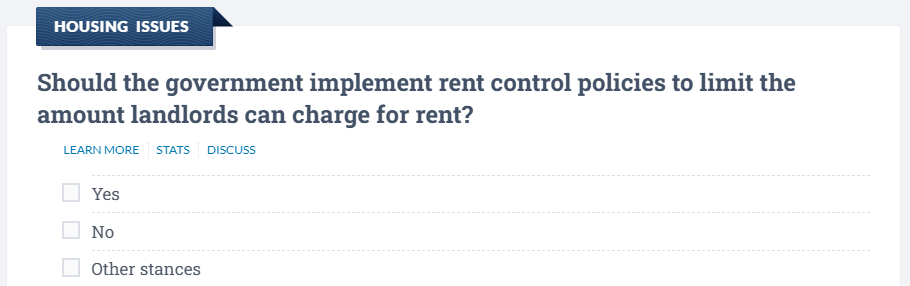
Shown below is the first question of the ISideWith test, which "matches" you to a political party. "Should the government implement rent control policies to limit the amount landlords can charge for rent?" Guess what a clueless high school student is going to choose? No one wants higher rent, so why shouldn't something be done about it? Of course, the policy lacks the obvious implication of consequential housing shortages (which is not obvious to some high school student). If questions like this were repeated, the test would indeed confirm that you belong to the "Socialist Party".
Many of the test questions similarly require the questionee to have a breadth of knowledge to answer. However, this is not how my high school government class was taught. Rather, it was taught as largely "value-free" e.g. there is no truth except for what you believe. In other words, the truth is already within you rather than to be explored. Someone with a great understanding of politics and adjacent fields is just as correct as the one with no understanding. Further, these two opposed individuals will have the same weight in their vote. This is treated as sacred in American democracy. The duty to keep informed and educated on political issues is frequently ignored in place of the "duty" to just vote.
Traits of the political astrologer
- Never discusses or thinks about politics except during an election, when said person will become vocal.
- Will hold steadfast to their views despite contrary evidence.
- Refuses to explore differing perspectives.
- Is convinced that they are just as correct as anyone else.
- Believes the benefit of democracy has more to do with making the average person better off rather than making what is best for the common good and the republic itself. Restated, they believe if everyone votes for their own assigned orientation (and their own preferences), a comfortable average will be met.
The political astrologer will tell themselves, "Why should I explore differing perspectives? Why should I change my views? I already know what I am, which is held by other people, too."
Traits of the sensible voter
- Discusses and wrestles about politics regardless of whether an election is coming up.
- Open-minded to changing and/or adapting their views.
- Explores differing perspectives to reach the truth.
- Knows what is "correct" and what is "incorrect" in regard to a policy. (One must begin with the goal. In the housing scenario, the goal is to minimize the amount of people without a home. Or if you take the more cynical, and likely more accurate, view: the goal is to minimize the odds that the questionee will end up without a home. Now, one must consider the historical context and policies up until that point to properly ask how did housing get so expensive. Next, a myriad of solutions must be proposed and analyzed according to their costs and benefits.)
- Believes the benefit of democracy is to achieve the common good by asking what is best for the republic. Restated, there is no comfortable average. Instead, there is what is best for the republic and what is not.
An ideology should be a hypothesis about political reality, not a horoscope of the self. The purpose of political thought is not to discover which constellation governs you, but to understand the world well enough that, when your beliefs fail to hold up, you are capable of adapting.