To the seas, young man
[On Power]
Throughout history, there has always been an outlet for the boldest of humanity to take a chance. That chance was on the frontier: wild, lawless, vast, and overflowing with the opportunity to make a name for oneself. Whether this was as a soldier, settler, or businessman, the frontier could provide status in societies where social status was increasingly rigid, creating a new aristocracy of frontier elites to counter a decaying oligarchy.
In Rome, novus homo consul Gaius Marius rose through the ranks through his campaigns in Numidia and against Germanic tribes. Julius Caesar, though a patrician, made a name for himself on the frontier in the Gallic Wars. Consul Pompey exploited the frontier of Spain and the East to become something of a military entrepreneur. In the United States, Andrew Jackson's campaigns against the natives and the English in New Orleans propelled him into the presidency. Davy Crockett, "King of the Wild Frontier", became a U.S. Representative of Tennessee through his reputation as hunter, storyteller, and frontiersman. Henry Wells and William Fargo of Wells-Fargo fame exemplify this absent of military exploits, providing "express" and banking services during the California Gold Rush and creating institutions which would serve as a foundation to early civilization there.
For the last century or so, society has had a major problem: the frontier is closed. Even in the barren arctic, there are established institutions ruled by the existing elites. The Antarctic seems to be the last frontier, but its status under the Antarctic Treaty makes it politically impossible to utilize. Consequently, as the ruling class decays and social mobility declines in absence of the frontier, the youth are becoming increasingly resentful and politically extreme. I propose a new frontier (and it's not Mars): the vast open range that is our ocean.
The settlement of the American west
When Americans think of westward expansion, they think of cowboys and natives on flat, dry prairies under the desert sun. However, I would argue that westward expansion goes back to the Roanoke Colony of 1587 and later Jamestown in 1607. After all, the east coast of America was still west of the English settlers.
In American history, you will also see how greater proximity to power can encourage new and innovative systems of governance. The original thirteen colonies are a great example. The Virginia Company and Massachusetts Bay Company were originally governed by their respective shareholders, effectively creating privately owned states. The Massachusetts Bay Company eventually merged with the Plymouth Colony to create a radically democratic and religious system of governance. Pennsylvania, founded by William Penn, was another (more successful) example of an effectively privately owned state.
As the United States aged, the western frontier was pushed further back. Initially, the frontier ended at the Mississippi River. In 1803, Jefferson made his controversial Louisiana Purchase from Napoleon to double the size of the U.S. and pushed the frontier up to the foothills of the Rocky Mountains and beyond. With the Mexican Cession of 1848, later minor claims, and the Alaska Purchase of 1867, the continental U.S. finally took shape. It would not be for another century that the frontier ended with the admission of Alaska as a state in 1959.
The Land Ordinance was passed in 1785 under the Articles of Confederation, establishing the process for surveying and selling land in the western territories. It worked by dividing land orthogonally into townships and smaller sections. This land was to be sold by the general government to western settlers. The Homestead Act of 1862 replaced the Land Ordinance. In place of selling the land, it offered 160 acres of public land for a small fee to those who settled on the land and improved it (and who never took up arms against the United States). Ironically, the Homestead Act would have worked much better for the land which was sold during the Land Ordinance period...as by 1862, settlers were looking westward at increasingly arid and infertile land. 160 acres, which was meant for farming, simply wasn't ideal for the geography and conditions of the arid west which favored mining and ranching. In comparison, these industries required much larger plots of land. As a result, many homesteads in the west failed and were abandoned, leaving nothing but public land. This public land became the open range, and with the open range came the birth of America's vagabond icon: the cowboy. To "settle" the west, the cowboy took up jobs to drive cattle to market, never making permanent homes for themselves. Largely due to Reconstruction, northerners primarily took the reins of power in the west and became cattle barons, mine owners, and railroad owners. Because of the drastically different geography, climate, and organization of the arid west, as well as the incredible distance from general civilization, new systems of governance had to be developed on the frontier. Mining guilds and cattleman associations replaced traditional law in many areas. Private detective agencies, like the Pinkerton Detective Agency, replaced enforcement. When considering how young it was, the system worked well. By the 1890s, barbed wire became standard and the open range became a closed range. Civilization from the east steadily creeped in and replaced the frontier system with a more traditional method. Today, the federal government still owns much of the west due to the failure of the Homestead Act to account for western conditions. The Homestead Act was officially ended in 1976.
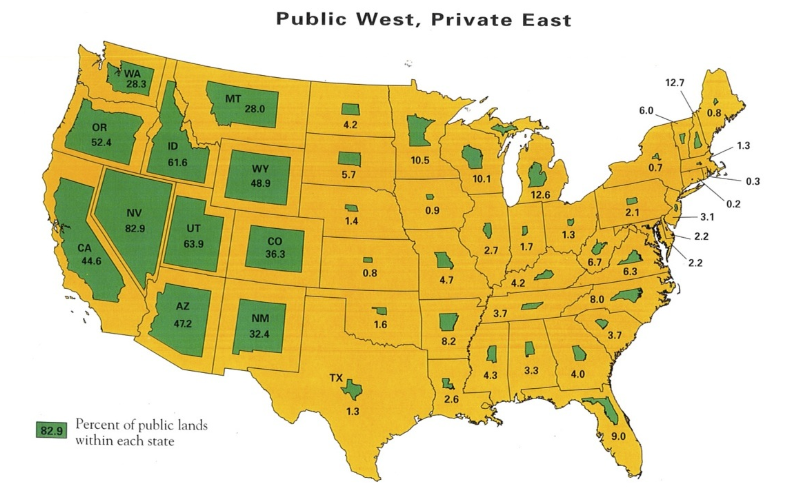
In the absence of state control (by proximity or negligence), the general history of American west shows that the frontier can develop a spontaneous order, fostering new and innovative systems of governance.
The post-homesteading age
Born too late to be a cowboy and born too early to be a space pirate. Born just in time to use Excel spreadsheet.
It is true that opportunity is abundant to make money with the advent of the internet and social media. However, this is the only opportunity that the youth is given to get ahead.
In 2025 Nepal, youth unemployment was over 20% due to little opportunity and poor economic policies from Nepalese elites. As their only outlet, the youth used social media as a means to create opportunities for themselves. In September 2025, the Nepalese government banned 26 social media platforms as a seeming attempt to silence detractors, targeting the "zoomer" youth the hardest. Thus began the Nepalese "Gen Z Protest", whereby the zoomers took to the streets and ran out their prime minster.
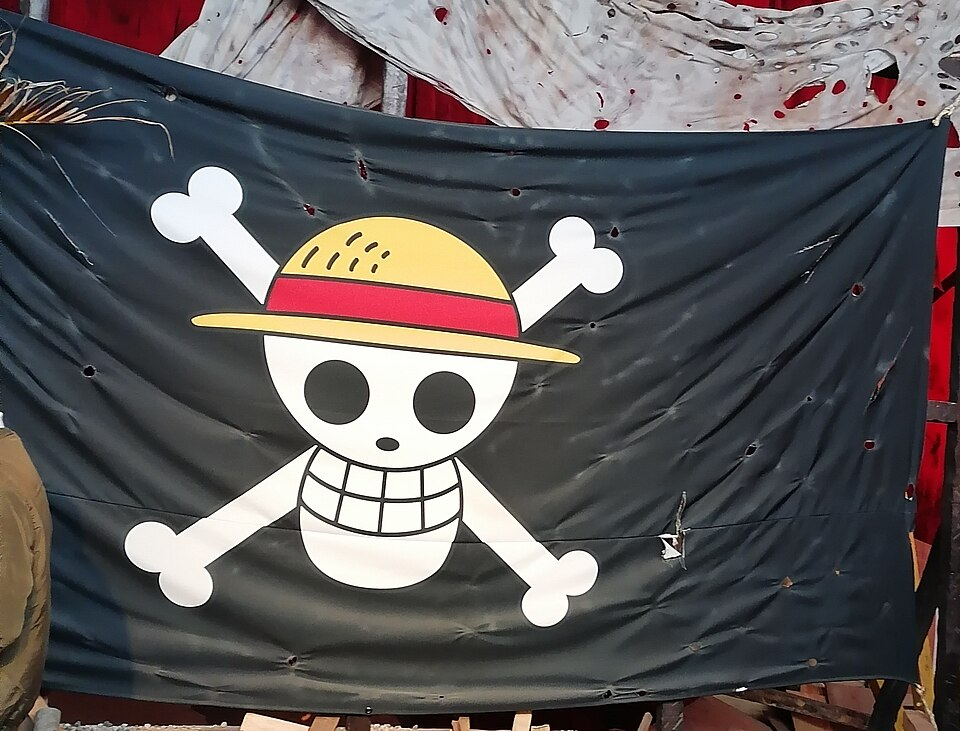
Gen Z protests are global and have also occurred in Bangladesh, Indonesia, Philippines, Timor-Leste, and the Maldives. The international symbol of Gen Z protests is the Straw Hat Jolly Roger flag from the Japanese anime, One Piece–a symbol of frontier swashbuckling on the high seas, where the elites had no power, buccaneers developed their own governance structures, and opportunity was romantically rife.
While the internet is truly a digital frontier, it serves as a stand-in for the rawer and more instinctual urge to make oneself on the real frontier. After all, the internet is still subject to the levers of power held by aging elites. While wealth is possible to attain, foundational and institutional status is largely out of the question.
The seasteading age
As hopeless as it may seem, the frontier is still open. One just needs to look to the vastness of the ocean. After all, as the great British band America once said, "the ocean is a desert with its life underground and the perfect disguise above."
Our planet is 71% water and 97% of that is ocean. There's plenty of room to spread out. Imagine an international system of floating city-states with their own unique identities, with personal or commercial boats and planes travelling in between. It is easy to forget that city-states exist today: Singapore, Monaco, and Vatican City. Republican cities, monarchist cities, private cities, socialist cities, progressive cities, diverse cities, traditionalist cities, and nationalist cities are all theoretically possible city-states as long as somebody is willing to take the risk to start one on the water.
This way, anyone can theoretically achieve their own institutional power by their own making. Not only this, but it creates a competitive atmosphere of governance whereby parallel systems exist to attract residents or citizens. Instead of 196 countries, imagine there was double the amount. How do republican, monarchist, socialist, or private cities function best? What works and what does not work? Questions like these can be answered with enough case studies in competitive governance. These cities can provide economic opportunity and refuge to those who have little in existing nation-states, even forcing those existing nation-states to compete for their own citizens.
But how might this be done? There are few ways which have been discussed:
- Floating marina of independent boats method. This is definitely the cheapest option and is being actively worked towards by the Atlas Island community. Effectively, it involves a community of seasteaders to be moored in one area in the ocean. However, this method is limited because it provides no infrastructure. In effect, its camping on water.
- Enormous boat method. Whether it's a tanker ship, cruise ship, or aircraft carrier, these vessels can carry an enormous amount of people and are already larger than many towns. As opposed to the following method, these vessels already exist and can provide an early experiment in large-scale seasteading. In addition, they are maneuverable and may relocate easily. However, they're not modular, meaning the city will effectively have a design life.
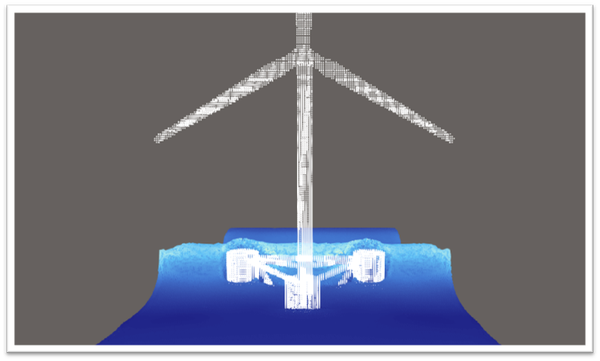
- Modular floating platforms. This is the gold standard of seasteading and would allow for the development of long-term, large-scale floating cities whereby infrastructure and buildings can be constructed on stable platforms. Since the platforms are modular, the city is scalable and sections may be replaced over time. In contrast to the previous two methods, there are no sure designs for a modular floating platform due to its risky, novel, and expensive development.
For practicality's sake, I imagine governments will be the first to own or sponsor the development of floating cities. As these cities extend farther into the open ocean, they may grow independent and enter a pseudo-sovereign state, whereby a floating city will have a sponsor country but function autonomously (similar to a colony). Eventually, the rise of private defense services may invalidate the need for these sponsorships, enabling a sovereign system. While this is one interesting theory on how this might arise, no one can say for sure how we might get there. What is important is that modern frontiersmen start to try.
Learn more in my previous essay, "Habitable floating megastructures: setbacks and solutions".
On the future of statehood
The nation-state system established after Westphalia is increasingly struggling to accommodate populations that are dissatisfied with existing political and economic arrangements. Initially, they worked well to modernize and scale through bureaucracy. As states matured, they gradually abandoned kingship and autocracy to adopt republican structures, especially following World War I. Instead of putting power in the people, this system gave rise to a new internationalist elite which was cemented following World War II, like the IMF, World Bank, UN, multinational corporations, and transnational bureaucracies. This oligarchy is being threatened by extreme political ideas in the youth, who are quickly rejecting this framework on the left and right. Little is more dangerous than a country of frustrated, angry, and revolutionary-minded youth. I hope to expand and elaborate further on the history of the decay of the nation-state system in a future post.
If history is any guide, the decline of existing political systems is not the end of hierarchy, but the prelude to its reformation. What comes next? I imagine a mix of varying systems to be accompanied and accelerated by a bold new aristocracy of ocean frontiersmen.