Civilization and barbarism
[On Power] [Social anthropology]
The words "civilization" and "barbarism" are used liberally without care. Often, civilization (and "democracy") is simply the de facto force of good and vice versa. In the United States, the right loves to claim themselves as the civilizing force against those who would tear down civilization to build a dystopia, leaving nothing but primitivism. The left prefers to frame themselves as the rational, scientific institution-builders defending civilization against the barbarism of religion and tradition. Each side denounces the others as barbarians without a proper understanding on the terms.
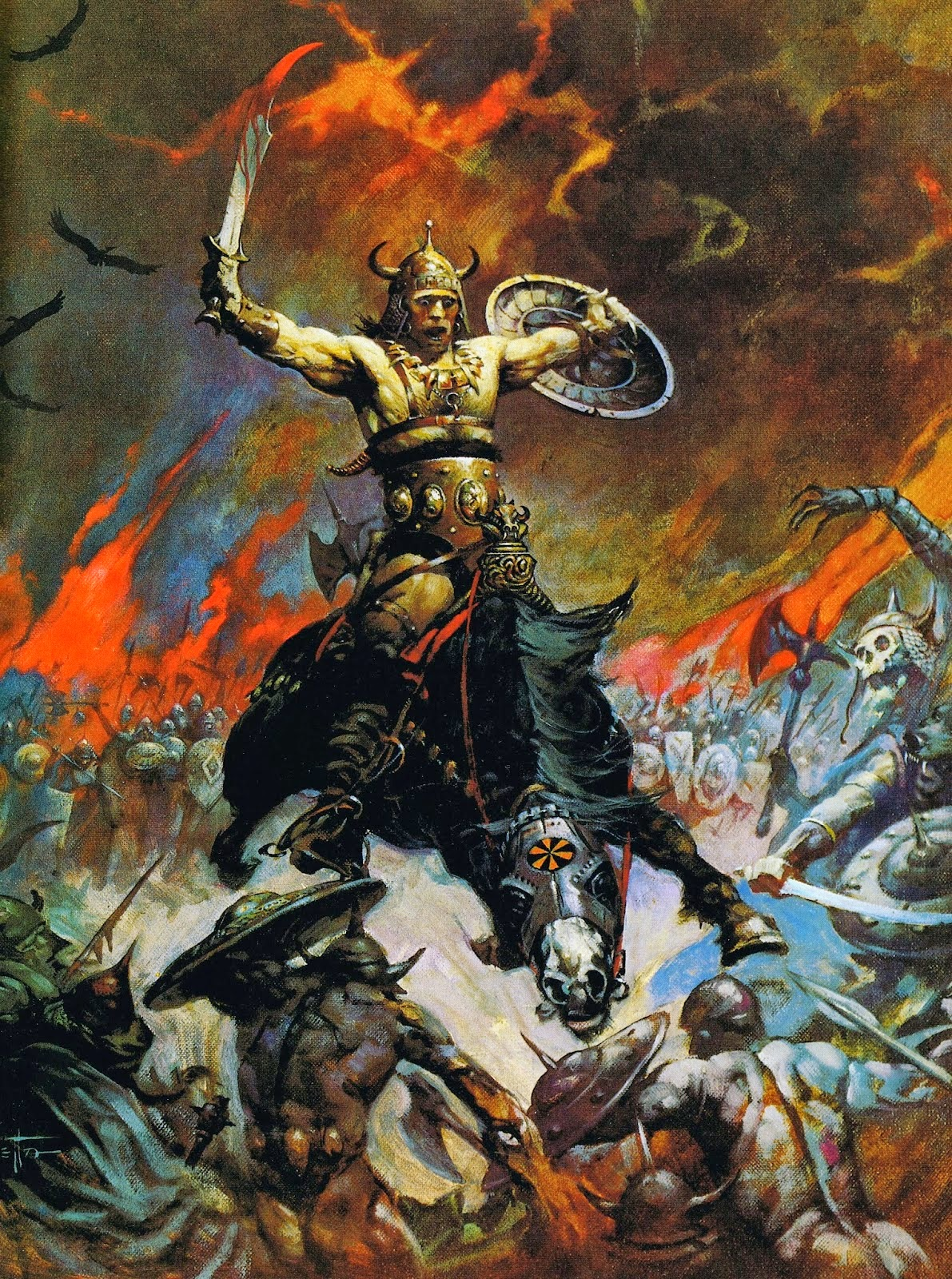
Robert E. Howard, pulp author of Conan the Barbarian, took an unorthodox view and defended barbarism against the corruption of civilization. I appreciate Howard's pushback; it allows us to properly analyze the difference between these two states to take a more balanced perspective. H.P. Lovecraft and Robert E. Howard of Weird Tales fame were close contemporaries. They often swapped letters with each other, fiercely debating the sides of civilization and barbarism. H.P. Lovecraft, a secular cosmopolitan Yankee, defended the side of civilization. In his mythos, civilization was always the safer option from those unknowable cosmic forces. Robert E. Howard, a Scots-Irish Texan, took the side of barbarism, claiming civilization was a fleeting circumstance compared to the natural state of barbarism, often emphasizing the cycles of civilizational corruption and decay.
"Barbarism is the natural state of mankind. Civilization is unnatural. It is a whim of circumstance. And barbarism must always ultimately triumph." -Robert E. Howard, Beyond the Black River
Dissecting origins and definitions
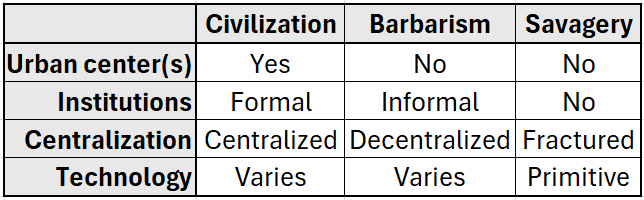
"Civilization" is rooted in the Latin word "civilis", which relates to a society or citizen, and derives from "civis" (citizen) and "civitas" (city). Civilization is typically poorly defined with varying definitions from over the years. Merriam-Webster defines it as "a relatively high level of cultural and technological development" and, specifically, "the stage of cultural development at which writing and the keeping of written records is attained." The latter definition is useful because it provides a method for measuring civilization rather than relying on the vague 'high-level' definition. However, the Incans did not actually have a system of writing. They did have the "quipu", which was used to track quantities of items, but not an actual written language. I think few would argue that the Incan Empire was not (mostly) a civilization. To expand on Merriam-Webster, I define a civilization as a large-scale society with one or more urban centers and formal institutions. It is a vague definition, but I believe it will change your perspective for the better. Urban centers go hand-in-hand with trade and governance, which necessitate formal institutions, a division of labor, and civil infrastructure for efficiency. With these, civilizations will also have a recognized coinage. For these reasons, civilization is more centralized than barbarism. Last, I want to add that civilizations are generally more ideological, typically because they can afford to be and rulers can use ideology for a moral justification to rule over large groups of people.
"Barbarian" is rooted in the Greek word "barbaros", which was meant to describe any non-Greek speaker (famously sounding like "bar-bar" to the Greeks). In contemporary language, "barbarism" is more typically defined as the absence of civilization. Merriam-Webster's definition is not much different. As a more useful definition, I define barbarism as a society without urban centers and with informal institutions. In other words, loose tradition or might will take precedence over strict interpretation or codification. For this reason, insurrections and coups are often called "barbaric". Barbarian societies might not have coinage but may have money in the form of a widely accepted good. Contrary to civilization, barbarism is more decentralized.
In our modern constitutional society, it is difficult to see the difference between formal and informal institutions of history. It is true that the distinction can be foggy. Examples of unquestionably formal governing institutions are ancient Babylon via Hammurabi's Code or the Hittite Empire via their written legal code. At one point, every society had informal institutions. The process by which the title of "chief" is passed can vary and likely depended on the context. Further, I believe a particularly strict adherence to tradition can be defined as a semi-formalization (without codification). Of course, this makes some societies difficult to categorize. The Incan Empire, as a short-lived empire with urban centers and semi-formal institutions sits somewhere in between civilization and barbarism, but ultimately closer to civilization.
Is there a third side? Somewhat. Edward B. Tylor, born in 1832, was a proponent of "cultural evolutionism". He took a more rigid definition to these terms and defined three stages of human development: savagery, barbarism, and civilization.
"Culture or Civilization, taken in its wide ethnographic sense, is that complex whole which includes knowledge, belief, art, morals, law, custom, and any other capabilities and habits acquired by man as a member of society." -Edward B. Tylor in Primitive Culture (1871)

In this view, barbarism is the middle stage of human development–more civilized than savagery but not to be described as civilized. Pulp writer Robert E. Howard was a proponent of cultural evolutionism, describing the brutish "Picts" as degenerated savages, the "Cimmerians" as stalwart barbarians, and the "Hyborian" nations of the West as a cesspool of civilized corruption. This definitional framing is not generally recognized today. Instead, "savage" and "barbaric" are often used interchangeably, which is not very helpful. At the very least, savagery is defined as a form of barbarism today. As a more useful definition, I define "savagery" as a society without urban centers or institutions of any sort. Rather than being just decentralized, savage societies are generally fractured and isolated by geography. As a fractured type of society, there is no need for monetary exchange in place of simple barter.
Note that I do not use the terms "barbarian" or "savage" as a pejorative, but as a method of categorizing societies to better analyze them (and hopefully replace their pejorative definitions).
L.H.B. defines things:
Clashes in history
The clash between civilization and barbarism has been constant and even romanticized through history. In fact, clashes between civilization and barbarism are as old as civilization itself. The Sumerians (c. 3300 B.C. - c. 1900 B.C.) and the Akkadian Empire (c. 2334 B.C. - c. 2154 B.C.) fought the Gutians of the Zagros mountains. Perhaps the most famous example in history, the Romans fought the barbaric Gauls of modern-day France (and later the Germans) on their northern border while they battled the civilized Parthian Empire (and later the Sassanids) on their eastern border. And let's not forget Rome vs. the nomadic Hunnic barbarians! Across all major dynasties (even the Yuan), the Chinese have battled against nomadic barbarians. First, they warred against the Xiongnu, then the Turks, then the Mongols. Of course, the Mongols warred against almost everybody in Asia at one point. Even pre-Columbian America had these tensions, whether it was the Aztecs or the Incans fighting against bordering tribes.
Civilization does not always triumph. Rome was sacked by the Gauls in 390 B.C. and was completely conquered by the Germanic Ostrogoths and the later Lombards. China was conquered by the Mongols, which began the Yuan Dynasty. The Mongols also conquered Persia, Mesopotamia, and most of Anatolia with lightning speed, which was under the rule of the Abbasid Caliphate. Before that, the early Arab tribes banded together to form the Rashidun Caliphate and defeat the Byzantine Empire and conquer Persia from the Sassanids.
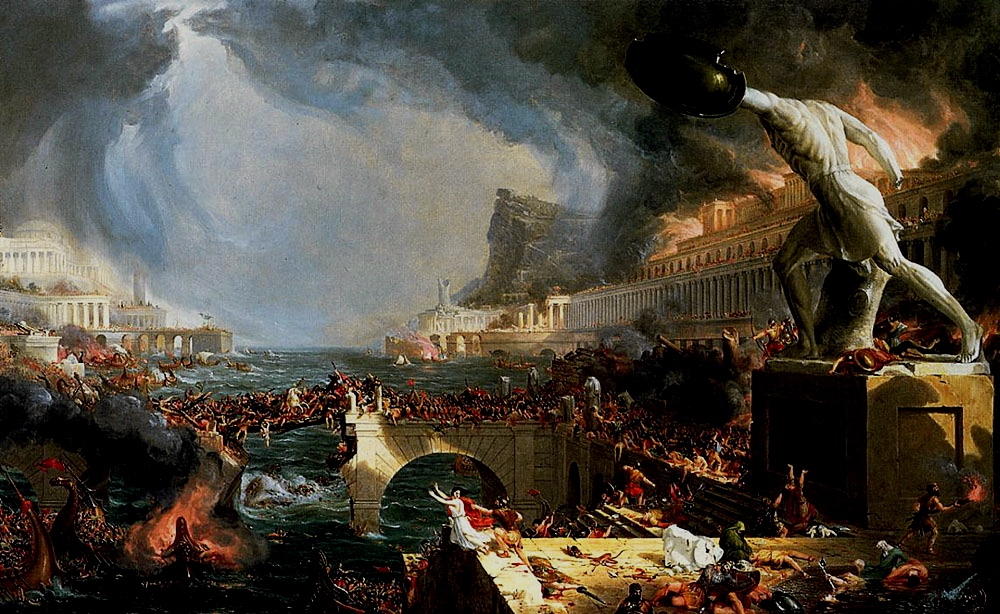
Modern examples of this clash are well-represented in the United States and Argentine forces against the native populations. Among the most formidable enemies of the U.S. were the Comanche, Lakota, Apache, and Seminole people. However, it was not only armies that fought the natives, but American settlers moving closer into native territory. The Mapuche are often considered the most formidable enemies of the Argentine forces during the Conquest of the Desert (1870s-1880s) under Julio Argentino Roca and Desert Campaign (1833-1834) under Juan Manuel de Rosas.
The Argentine Civil War (1814-1880): a case study of modern barbarism
The Argentine Civil War is one of the most interesting and overlooked political events. Before Domingo F. Sarmiento became president of Argentina, he was a journalist and scathing unitarian critic of the "federalist" forces of the Argentina Civil War. In fact, the primary "barbarians" in the Rio de la Plata were not seen as the natives, but the wild Federalists like Facundo Quiroga, Justo Jose de Urquiza, and even Juan Manuel de Rosas (who led the Desert Campaign). Unfortunately, there is a real lack of history about the Argentine Civil War written in English. Without a doubt, the most famous work about the Argentine Civil War is "Facundo, or Civilization and Barbarism" by Domingo F. Sarmiento about the life of caudillo leader Facundo Quiroga. As a critic of the Federalists, Sarmiento puts his own propagandistic spin on the narrative. However, Sarmiento was right in many regards. Many of the Federalist forces were effectively barbarians.
The Federalists did not start as a force for barbarism. In reality, the Federalists were a very complex political faction in their time. Initially, it was represented by federalist liberals like Manuel Dorrego. Dorrego fought in the Army of the North during the war for independence. He was eventually exiled and spent much time in Baltimore, Maryland, where he learned about U.S. federalism and became an opponent of centralization. Bernardino Rivadavia, who is regarded as the first president of Argentina, was a liberal and strong advocate of centralization. At its core, the issue driving the Argentine Civil War was about who would control the customs port in Buenos Aires. Argentina is effectively a massive river basin with its water draining into the Rio de la Plata. Whoever could control the port could control the entire country. This topography is why Rivadavia saw it necessary to establish a strong central government. However, facing opposition from the provinces who did not want to be controlled by Buenos Aires, Rivadavia resigned and Dorrego was appointed. Not long after, Dorrego was overthrown and executed by unitarian general Juan Lavalle. Chaos broke out. Provinces refused to recognize Lavalle and the caudillo Juan Manuel de Rosas was elected to restore order. From this point on, the "Federalist Party" shifted from a liberal federalism (akin to the U.S.) to the party of Rosas and caudillos.
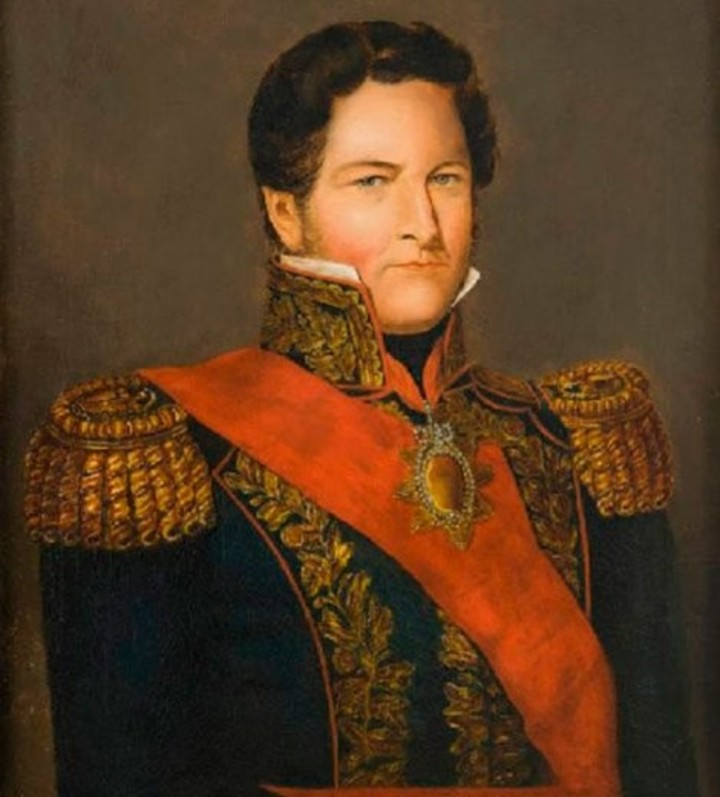
What did Rosas believe in? Rosas was not very ideological. He was not a champion of Argentine independence and republicanism. In fact, he was sympathetic to French Absolutism. He was not a federalist or a unitarian in the classical sense. Rosas believed in restoring order by whatever means necessary, including state terrorism. Other than that, Rosas was a large landowner in the rural elite and always sought to benefit his friends in the rural elite. But Rosas was not truly a barbarian. He was a well-educated man from a wealthy family. More or less, Rosas just had a heavy-handed belief in civilization. However, many of those under Rosas (at least as described by Sarmiento), did embody barbarism.
The Federalists' base of support was in the provinces. In particular, in the provincial landed elites (owners of estancias/ranches). These elites employed gauchos and peons for labor and effectively used them as soldiers to protect their property. Effectively, there was something of a feudal system in the Argentine campo (countryside). The gauchos were a nomadic people and similarly romanticized like the American cowboy. They were often of mestizo blood, uneducated, and strong in their Catholic faith despite their inability to read. They roamed across the campo and fed off of the abundance of cattle on the open range. They stopped in towns to drink and knife-fight before leaving with their guitars on their brother-like horse...and the most infamous gaucho was known as Facundo Quiroga.
Facundo was born to poor parents in the northwestern province of La Rioja. He was a notorious problem child and fled from his school at an early age. During his wandering, Facundo may have slain a cougar one-on-one, earning him the title "The Tiger of the Plains". Following the fall of Buenos Aires, Facundo assumed control of the provincial government of La Rioja and became a close ally of Rosas. Ideologically, Facundo was not a federalist personally but more unitarian, even clashing with Rosas at times to support a unitarian republican government. Regardless, Facundo carried the "Federalist" label because it is what he believed the people of the provinces wanted. Despite not being public about his religious views, he strongly supported the Catholic faith and vied for the Church to side with the Federalist cause. He infamously adopted a "religion or death" flag.

It is ironic that Facundo and Rosas are so representative of the Federalist Party despite their opposition to federalism. During the reign of Rosas, Argentina was centralized under the eye of Buenos Aires which was terrorized as regular people were effectively forced to swear by the Federalist slogan, "death to the savage unitarians!". This slogan was also printed on every government document in the fear that Rosas' pseudo-vigilante gang "La Mazorca" would kidnap and execute them in the dead of night.
Rosas would eventually be overthrown by a former Federalist ally, Justo Jose de Urquiza (who was actually a federalist). Urquiza would preside as President over the Argentine Confederation and over the establishment of Alberdi's 1853 liberal constitution. This constitution would establish Argentina's early system, leading to its great wealth before the instability of countless juntas and poor economic policy.
In critique of Domingo F. Sarmiento, the Federalists were not barbarians at large. Even Sarmiento is sympathetic to the liberal Dorrego, though believed he was an ineffective leader. It's true Rosas exhibited many elements of barbarism, like creating informal institutions and retaining his dictatorship status through his strength and intimidation (even if continually re-elected). However, even the wealthy-born and educated Rosas knew that Argentina would eventually need a constitution and formal institutions. Rosas also carries responsibility for destroying the barbarian gaucho class by conscripting them for his wars and strengthening property rights on the open range, replacing their nomadic lifestyle with a more feudal one. Facundo is perhaps the best example (no coincidence he has the namesake of Sarmiento's book) of "modern barbarism". Facundo rejected civilization to become a gaucho, establishing himself militarily and later politically through sheer strength and will. He rejected formal institutions, did not play by the rules, and did not really care. Facundo was assassinated at Barranca Yaco during a trip to mediate a dispute between the provinces of Tucuman and Salta. Despite constant warnings of assassins at Barranca Yaco, Facundo continued unfazed, saying "the man is not born who will kill Quiroga."
Nietzsche on barbarism and the degradation of civilization
Nietzsche, like many, is guilty of using a vague and varying definition of barbarism. As Nietzsche matured in life, his definition and beliefs on barbarism evolved. In regard to the closest definition presented in this article, Nietzsche shares his thoughts in Beyond Good and Evil.
"Every elevation of the type "man," has hitherto been the work of an aristocratic society and so it will always be" -Friedrich Nietzsche, Beyond Good and Evil, Chapter IX
Friedrich Nietzsche believed that barbarism provided the raw vitality to the structure of civilization. A civilization will decline when it loses that energy, even if it keeps the form.
Every great civilization will begin with conquerors who are often forgotten in the birthing stage of civilization. These conquerors are chiefs of their tribes, chosen because of their wisdom and courage. The conquerors and their families become the aristocracy, or ruling class. For some time, these barbarian virtues and values define a civilization. As the aristocracy ages through generations, the original barbarian virtues of wisdom and courage are lost as civilization softens each successive generation with comfort, wealth, and pleasure. "Slave morality" emerges as the weak re-define virtues. Strength, pride, and ambition become cruelty, arrogance, and greed. In place of these, obedience, humility, and equality take precedence. Nietzsche used this framework to define the Christianization of European barbarians, among others. As slave morality pervades, civilization becomes decadent and feeds off the greatness of its ancestors, leaving them open to the conquest of new barbarians who form new values.
Nietzschean thinker Costin Alamariu, in his book "Selective Breeding and the Birth of Philosophy", describes a "rebarbarization" of civilization through a strong leader who embodies "phusis" (nature). Examples include Napoleon, Caesar, and Alcibiades. In Alamariu's worldview, the tyrant and the philosopher play very similar roles, but use different methods—to revitalize a decaying civilization whether by force or by eugenic philosophy. In particular, he points to the trial of Socrates during the "Greek Golden Age", who was accused of enabling the Tyranny of the Thirty. In contrast to Nietzsche, Alamariu believed that Plato believed in the right of the strong to rule. He analyzes Plato's dialogue Gorgias, arguing that Plato actually took the side of Callicles (who believed in the right of the strong to rule) but had to keep his philosophy ambiguous to avoid a similar fate to Socrates and to keep the philosophic tradition alive in Greece.
Contemporary barbarism
Where are the barbarians today? If you're on the right, you might say impoverished immigrants are the "barbarians at the gate". If you're on the left, you might say that heavy-handed leaders and their supporters are the barbarians. In truth, there really are no barbarians left in the contemporary age. Except for small pockets in vast isolated areas around the world, industrialization and globalization has centralized the entire world under a bureaucracy which does not only insist on participation but forces it.
Per Nietzschean philosophy, who will be the next wave of barbarians to sweep civilization over? In short, there won't be. At least, not in the way it has been historically. Rather, the emergence of a new aristocratic culture (somehow) might foster the rise of the Übermenschen within civilization, those capable of greatness who create values and refuse domestication—a kind of barbarian soul.
Civilization or barbarism?
Civilization and barbarism are not two opposing extremes. Instead, they are systems which complement and require each other. In contrast to the current zeitgeist, barbarism is not the sickness but is often the cure. As civilization provides structure, barbarism provides will and vitality. A civilization devoid of barbarian spirit will grow stale and decadent whereas a barbarian society devoid of civilization will never progress to greater levels.
With the current state of civilization in mind, it may be time to recover some of the virtues traditionally associated with barbarism: a will to power, affirmation of life, and the joy to dance over the pool of oblivion.